Step 1Support the trains that already run
Running
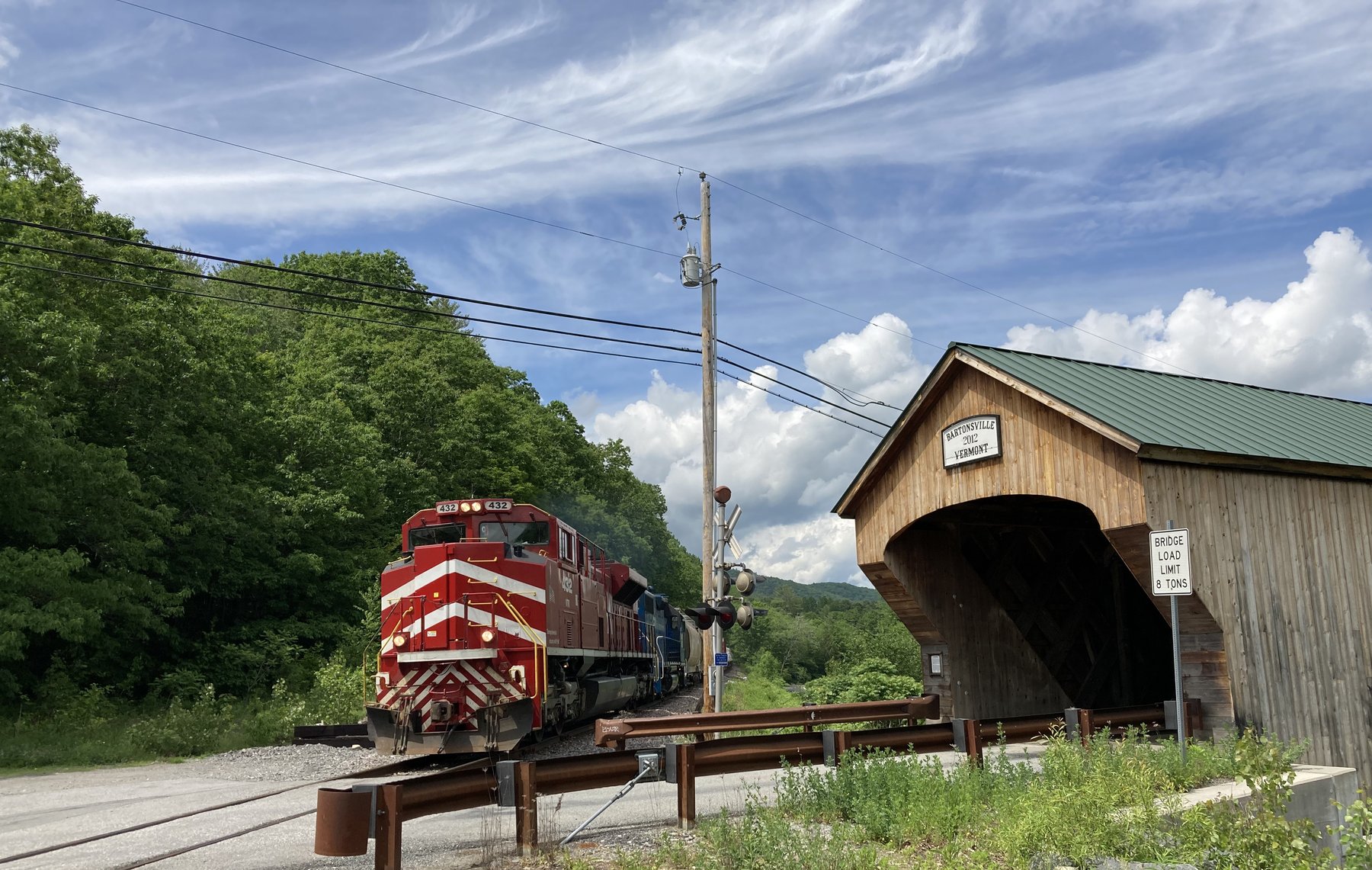
Three excursion trains run on this line in 2026, all with Vermont Rail System's cars, locomotives and crews: the Okemo Valley Regional Chamber of Commerce's new Foliage Train out of Ludlow in October, the Bellows Falls firefighters' Santa Express out of Bellows Falls in November, and the Chamber's Okemo Valley Holiday Express, two days each December from Chester Depot, staffed by about fifty volunteers and sponsored by local businesses including Okemo Mountain Resort. The Holiday Express sells out. These trains belong to their sponsors, not to us; the dates and ticket links are on the home page.
Our part: help them grow, and help them count. With the sponsors' agreement we want to learn where riders come from and how far they travel, and publish the summary. That is the first piece of ridership evidence this corridor will have produced since 1998.
Step 2Connect to Amtrak at both ends
Partly exists
The pieces are already on the ground. Amtrak stops at Rutland and Bellows Falls every day. The Bus runs Rutland–Ludlow seven days a week from Thanksgiving to Easter, but its day ends at 7:24 pm and the northbound train arrives at 7:46 pm. The MOOver's route 57 runs Bellows Falls–Chester–Ludlow on weekdays, free, but it does not pick up at the station and its times miss the Vermonter. What is missing is timing, a listing, and anyone telling visitors it exists. And the state has already proposed this step in its own words: the 2025 Vermont Rail Plan's recommended initiatives include investigating "a coordinated connection (rail, bus, etc.) at both Rutland and Bellows Falls to connect passengers between the Ethan Allen Express and the Vermonter to Killington, Ludlow/Okemo and Chester" (Table 17, page 62). We intend to help the state do what its plan recommends.
Our part: a bus that meets the train at Rutland and one that meets it at Bellows Falls, both of them bookable with an Amtrak ticket, and a guide that is accurate today. Elsewhere, timed buses are how state transportation departments extend rail into small towns as a matter of routine.
Step 3Charter and themed trains
Exploring
More of what the Chamber has just shown works: foliage trains, a dining train, a few dated ski weekends, run with Vermont Rail System's own equipment and crews over the line they already operate. Amtrak stopped running one-off charters in 2018, so the railroad that is here is the partner that matters. A sold-out special is the kind of evidence that has moved agencies elsewhere; two of them, in Colorado, brought a ski train back after a decade of studies had not.
Next step: a written quote from Vermont Rail System for a Chester- or Bellows Falls-based excursion. That single number tells us whether this is a plan or a wish.
Step 4Scheduled service through the valley
Long-term
The goal, and the slowest part. The 2025 State Rail Plan records public support for service through the valley and names the coordinated connection as an initiative — but a scheduled train itself is not yet on the state's list, and getting it there is the long campaign. Scheduled trains are a state budget decision, they depend on the condition of the track, and they take years everywhere: Maine's Downeaster took twelve from a first meeting to a first train. We would rather say that than promise a date.
Our part: deliver the connection the plan already recommends, and use its riders to make the case; get the train itself named in the next plan; support the state's own freight upgrades on the line, every one of which also raises the passenger ceiling; and ask that the Okemo Valley be evaluated within the two federal corridor studies Vermont already sponsors, which end at Bellows Falls and at Rutland.